

(Artwork by Bizri)
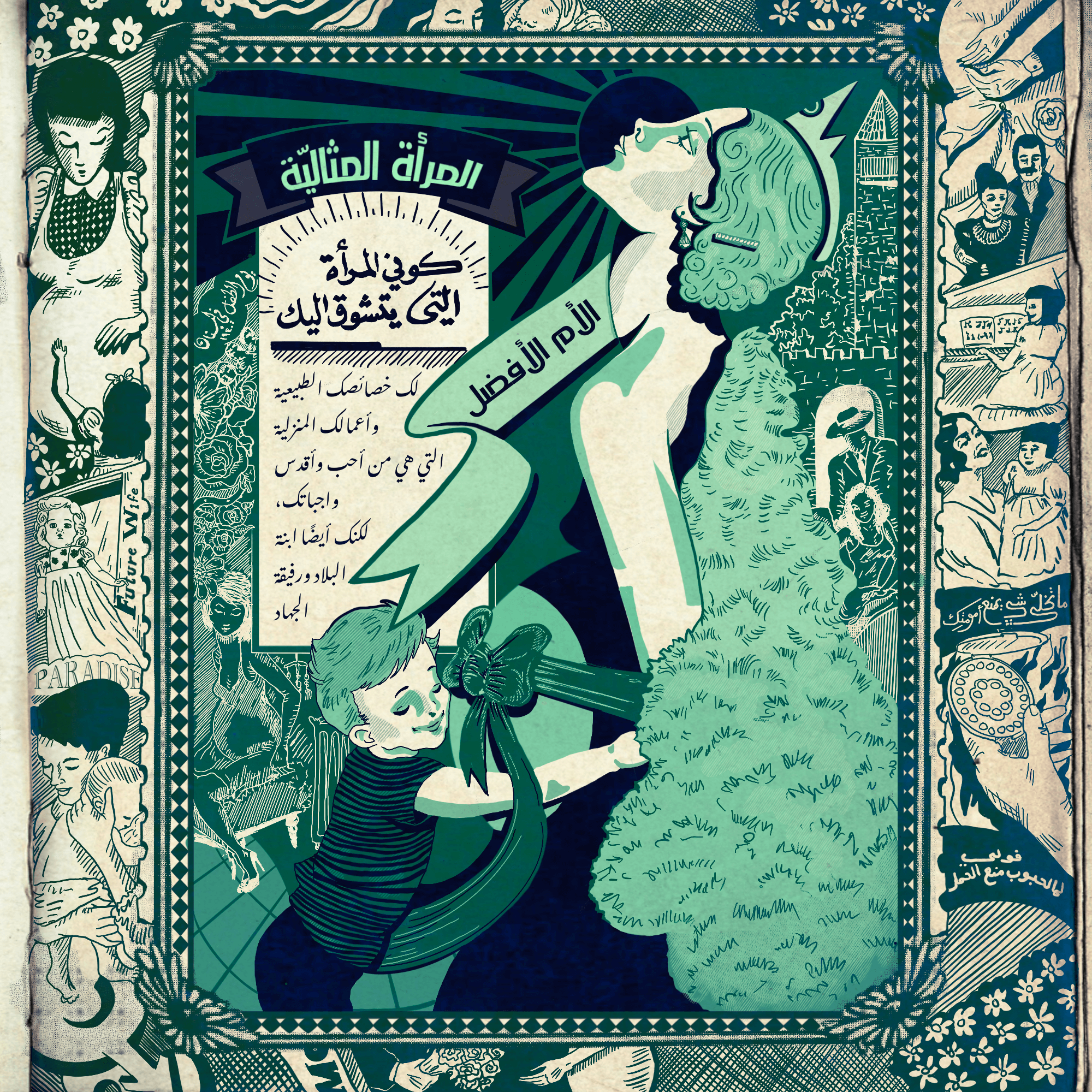
Patriarchal structures and dynamics during the 1940’s reproduced a strict social divide between public and private spaces, between the spaces men could access and those that women were expected, if not forced, to remain in.
Of course, women’s own access to the public arena differed depending on her social, economic, religio-cultural, geographic, and perhaps political standing (or that of the men she was affiliated to). But even among women who were publicly active and influential, there was a prominent discourse that particularly glorified motherhood and family life. This discourse, condemning women who seemed to subvert these expectations, was also put into policy and wide-scale commemoration: Mother’s Day became a national day in 1942 and birth control was outlawed the following year.*
This discourse was present in the same women’s magazines that published advice columns directing women to always look attractive and presentable, to seek education, to take on reading, art and culture. These magazines asked for men to guide women into what to read and what suitable and refined social circles to enter. Men, after all, the magazines presumed, were more knowledgeable and had more experience in these domains. As such, women were expected to be domestic in their role but publicly appealing in their aesthetic – and both characteristics were deemed inherent to femininity. Women had to be ever-present mothers to their children but to also spend their time shopping, attending to their looks, and becoming “cultured” and good companions to their already cultured husbands.
(Artwork by Bizri)
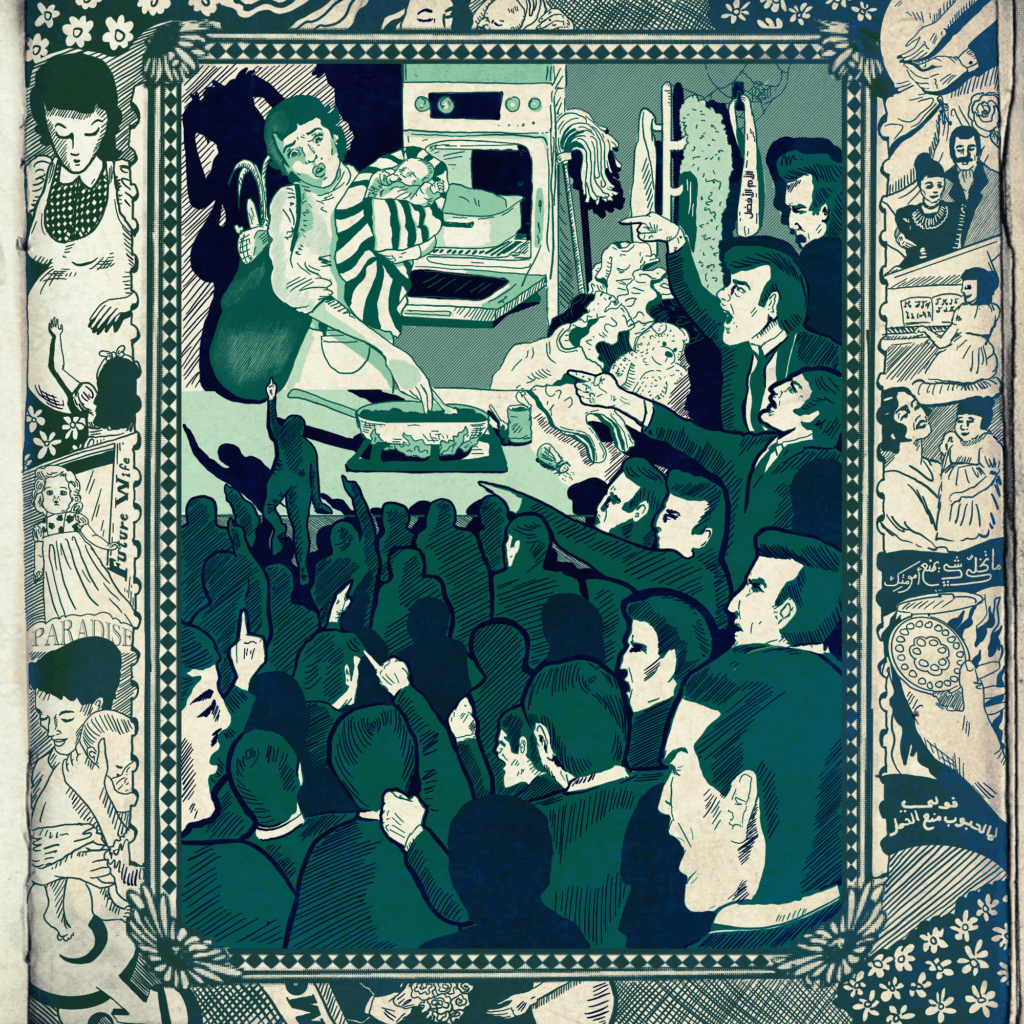
Any mainstream gender norms perpetuated in discourse, media, the market, cultural life, and social dynamics will have influence amongst certain communities. However, while many women may have found the portrayed characteristics and lifestyle appealing, and others were indeed able to access and attain them, they did not represent women’s realities. In the 40s, the majority of women carried out full time – and beyond – domestic and reproductive work, and their exclusion from the labor force (particularly white collar domains) as well as socio-cultural spaces was widely accepted and expected. Western fashion and beauty standards were not widely adopted, and socializing occurred more in local community gatherings and spaces rather than in centers of cultural activity.
There were of course critical voices that analyzed and challenged gender norms, superficial gendered rituals, and oppressive family relations. There were women whose lives disrupted traditional roles, and women actively shaping what these roles looked like. There was more political and public involvement, especially during, and as a result of, the socio-political movements of the time. There were also the more hidden struggles that we know were happening–because they always have been, and continue to be– waged more privately in women’s homes, won for upcoming generations of women to build on.
* Elizabeth Thompson, Colonial Citizens: Republican Rights, Paternal Privilege and Gender in French Syria and Lebanon (New York: Columbia University Press), 240-1.
Mohamad Soueid, dir. Women in Time (Original release 2002; Beirut; Arab Institute for Women)